ScrumReadout
A free toolkit of eight templates and AI prompts for Scrum Masters, producers, and delivery leads — built from the same reporting problem I work on at SciPlay. The board, the risk register, and the leadership update feed each other instead of restarting from scratch.

The problem I saw
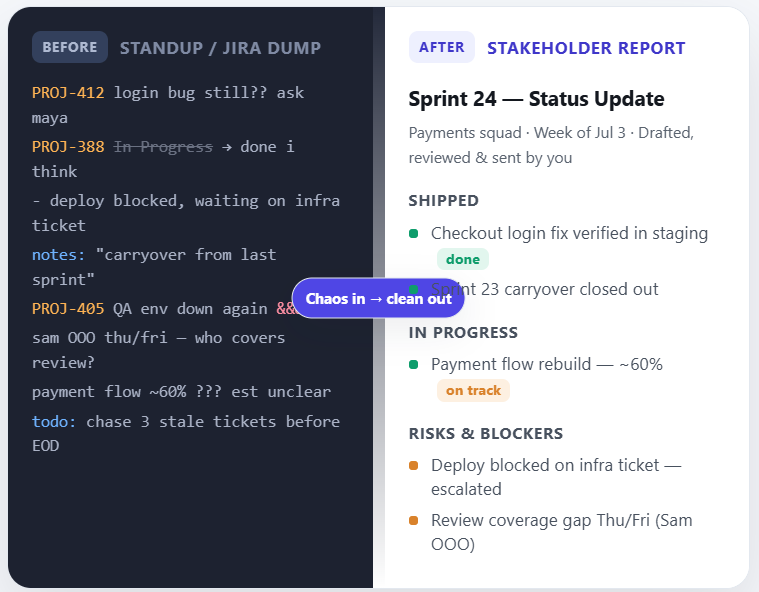
Every week the same job comes around. Pull ticket updates out of Jira, stitch in half-formed team notes, hand-craft the result into something leadership can read. I’ve written the night-before update for leadership plenty of times. It’s high-paid admin work, and it pulls the people who should be leading into formatting.
None of it compounds. The standup notes, the risk list, the status report — each one starts from scratch.
What I built
ScrumReadout is a free toolkit of eight assets — templates plus the AI prompts that drive them — for anyone who owes someone up the chain a report. The AI takes the messy ticket dump and the half-formed notes and returns a draft. The person sending the report still edits it, corrects it, and owns every judgment call in it.
The design decision I care about most: the eight assets are one connected system, not a folder. The Jira hygiene checklist surfaces the rot — stale tickets, zombies, missing estimates — and those zombies become tracked entries in the sprint risk register, each with an owner and an early-warning trigger; that risk then becomes a line in the stakeholder update, so leadership hears it early instead of at the deadline. Standups feed the register, retros feed planning, planning feeds the update.
Why I built it free
All eight assets, free: an email address, and they arrive within a minute. Nobody evaluates a delivery template by reading a sales page; they evaluate it by running it for a sprint. The people who need this are peers in my role, and I’d rather they run it than weigh it.
Where it came from
At SciPlay I built custom AI agents that strip repetitive delivery-management work out of the day-to-day, and authored an AI prompt-governance standard so the team adopts those tools safely and consistently instead of ad-hoc. ScrumReadout applies that same thinking to the reporting problem every delivery lead has, independent of my studio.
The AI drafts; it doesn’t decide. Every section, and every judgment call about what a stakeholder actually needs, came from running the ceremonies myself — cleaning up the boards, escalating the risks, writing that update.